
Diocese of Pembroke: Overview Report of Parishes (2025)
This report provides a comprehensive report of the current state of the Diocese of Pembroke’s nearly 55 parishes, as drawn from the most recent five-year financial data and parish profiles across its five deaneries: Mattawa, Pembroke, Renfrew, Pontiac, and Barry’s Bay. It captures the spiritual, pastoral, financial, and demographic landscape of each region, highlighting strengths, challenges, and pastoral opportunities that shape the future of the diocese.
1. Demographic and Community Trends
Across the Diocese of Pembroke, the most pressing demographic trend is the steady aging of parish populations. Parishes across all five deaneries report that the majority of their active members are over the age of 60, with some communities reporting over 90% of attendees in this age group. The implications are significant: volunteer fatigue, diminished youth engagement, and dwindling numbers for catechetical programs. In some parishes, this aging attendance presents critical challenges as long-serving volunteers reach the end of their capacity to serve, with few younger parishioners available or willing to take over essential ministries and administrative roles. Yet there are glimmers of vitality. In one of them, for example, post-COVID newcomers have infused the community with fresh energy, participating in liturgical ministries and social outreach. The importance of welcoming these new faces—whether young families, recent transplants, or those returning to practice—cannot be overstated; a warm, intentional welcome can transform occasional visitors into committed parishioners and future leaders. How can we invite new people to parish functions or events in a warm, welcoming way ?
Similarly, one parish attracts both long-established Catholic families and a steady influx of new families. However, in many rural settings, declining Mass attendance reflects broader social shifts and the urgent need for evangelization tailored to aging populations and isolated individuals. Some parishes also reflect the rural reality of outmigration, where younger generations leave for education or employment, leaving behind committed but increasingly elderly cores. Some serve as regional anchors for sacramental preparation, drawing families from beyond their immediate borders. This speaks to both the scarcity and importance of dynamic catechetical leadership in the diocese.
2. Liturgical and Faith Life
The liturgical life remains central to parish identity. Most parishes maintain a regular Sunday Mass schedule, with several offering daily Mass, Eucharistic adoration, and seasonal devotions. Some areas showcase strong liturgical culture, with well-attended weekday Masses and vibrant sacramental celebrations—one parish even has some scheduled servers rotating throughout the week. In another parish, there are multiple choirs leading Sunday worship, complemented by a strong RCIA program and adult formation. Other parishes, however, face pastoral limitations: some have ceased or limited operations due to unsustainable attendance and mounting debt. Sacramental preparation remains varied—some parishes have structured programs, while others operate ad hoc or rely on diocesan support. Efforts to re-engage families and offer formation for both children and adults are a common aspiration, with challenges tied to catechist availability and competing secular commitments. A parish expressed offering daily Mass and robust musical liturgy, with Sunday celebrations supported by an organist and choir. Despite these rich offerings, few parishes can sustain such frequency, and reliance on aging volunteers underscores a looming challenge. COVID-19’s impact on liturgical attendance continues to linger—some parishioners have not returned, and re-engagement strategies are uneven across the diocese.
The faith life of the diocese has been profoundly shaped by the presence and witness of various religious orders, particularly the communities of religious sisters who established schools, hospitals, and catechetical programs throughout the region. These religious sisters and brothers from orders that are still in our diocese or that have since departed laid foundational stones of Catholic education and healthcare, forming generations in the faith and leaving a legacy that continues to inspire vocations and service today.
Beyond parish structures, the diocese benefits from the presence of non-parochial ecclesial movements and lay apostolates that nourish the spiritual lives of the faithful. The Lay Apostolate of Madonna House in Combermere holds a special place in the diocese, offering a prayerful, contemplative presence rooted in the spirituality of Servant of God Catherine Doherty. Madonna House priests regularly assist in parishes, provide spiritual direction, and support diocesan retreats, while the community’s commitment to prayer, manual labour, and hospitality draws pilgrims and seekers from across the world. Other movements and communities also contribute to the vitality of Catholic life, offering formation, fellowship, and mission opportunities that complement parish ministry.
Our Lady Seat of Wisdom College in Barry’s Bay stands as a beacon of Catholic intellectual and spiritual formation in the diocese. As a post-secondary institution grounded in the liberal arts and Catholic tradition, the College serves not only as a center of learning but also as a place where vocations to the priesthood, religious life, and lay ministry are fostered and discerned. Its presence enriches the local Catholic community and strengthens the diocese’s capacity to form young adults in faith and reason.
3. Financial Overview, Parish Sustainability, and Priest Personnel
Parish financial data from the past five years reveals a diverse economic picture. Some parishes report stable or even surplus budgets, supported by legacies, investments, or vibrant donor bases. In contrast, several communities operate with structural deficits, sustained by occasional windfalls or diocesan support. A few have accumulated debts exceeding $100,000, with no feasible repayment plan.
Some parishes are currently experiencing other serious financial difficulties, with aging buildings requiring significant and costly upkeep—roof repairs, heating system replacements, accessibility upgrades—that current revenues simply cannot cover. These financial pressures create difficult pastoral and practical decisions about the future viability of certain facilities.
Fundraising remains vital: pancake breakfasts, parish suppers, and raffles are common. Mergers, closures, sale of land, or shared administration reflect growing need for cost-efficiency. Wages and Benefits (clergy and lay employees), insurance, and building repairs remain the largest expense categories, prompting many communities to critically examine the sustainability of maintaining aging infrastructure. The disparity in parish incomes is stark. There are parishes that report surplus revenues. Meanwhile, others experience regular deficits and must rely on financial campaigns or parish savings. The burden of heating oil systems adds to the cost pressures, prompting some to explore other systems of heating. The challenging financial situation in many parishes is further complicated by an operating deficit for the Diocese as a whole. This will affect the diocesan support which may be available to sustain parishes into the future.
We are facing a very serious crisis regarding the number of active priests in the diocese. In the course of the next several years, a number of priests will ‘retire’ from active ministry. In June 2025, there were 15 active incardinated priests, with 9 non-incardinated priests assisting the diocese. It is important to understand the distinction between these two categories: incardinated priests are those who belong canonically to the Diocese of Pembroke, having been ordained for service here or formally transferred into the diocese. Non-incardinated priests, often referred to as missionary priests, belong to religious orders, other dioceses, or mission societies, and serve in Pembroke with the permission of their superiors and the diocesan bishop, offering vital assistance but without permanent commitment to the diocese. This is a total of 24 active priests to serve 55 parishes. We expect that in June 2026, there will be 12-13 active incardinated priests, and 7-8 non-incardinated priests serving the diocese. This means we will have a total of 19-21 active priests.
In June 2025, we had 6 active permanent deacons serving in the diocese.
4. Pastoral Strengths and Lay Engagement
Despite aging populations, many parishes retain strong lay leadership. The CWL and Knights of Columbus are essential in organizing events, supporting sacraments, and providing financial aid. Some CWLs regularly call shut-ins, offer lunches, and run spiritual programs. In some parishes, lay catechists and pastoral volunteers maintain liturgical and outreach activities. Parish pastoral councils vary in activity—some meet quarterly, others rarely—but provide a forum for lay voice. Youth involvement remains a challenge, though some communities see momentum from homeschooling networks and sacramental prep programs. Strong clerical leadership often correlates with robust lay engagement. In certain communities, volunteer committees oversee liturgy, finance, and cemetery operations with precision. The property and finance committees function as key stewards, while groups like CWL continue their ministries of hospitality and bereavement. However, some parishes have not had a functioning finance council in recent years, suggesting opportunities for governance renewal.
5. Facilities, Infrastructure, and Cemeteries
Church buildings serve as both spiritual homes and symbols of heritage. Investments in accessibility, roof repairs, and hall upgrades have improved usability in many parishes. In addition, we also have many other buildings – halls, rectories, outbuildings. These also require maintenance, heating, and other associated costs. Some older structures face water damage, outdated heating systems, and limited accessibility. Cemeteries, often overseen by dedicated volunteers, are being mapped and digitized. Some churches are deemed irreparable, highlighting the toll of deferred maintenance. Where possible, buildings double as community hubs—used for school Masses, food banks, and social services. The effort to maintain heritage while ensuring safety and utility remains a balancing act. Cemeteries are central to parish identity and heritage. Quite a few parishes maintain multiple active cemeteries, coordinated by contractors and volunteers. Some have invested in cemetery expansion and digital mapping. Conversely, there are instances where rectories or parish halls face mold, water infiltration, and code compliance issues—limiting their use and impeding broader community engagement.
6. Collaboration and Regional Identity
Inter-parish collaboration is growing, driven by priest shortages, shared administrative needs, and pastoral strategy. In such cases, a shared bulletin, staff, and sacramental prep illustrate successful regional alignment. Some sectors with higher density population often coordinate events and retreats, while rural parishes align for funerals or catechesis. In the bilingual sectors of the diocese, some parishes dedicate themselves to offer services in a particular language, while another parish will offer it in the other language demonstrating adaptability. These initiatives foster a sense of diocesan unity, even as local identities remain strong. Enhanced digital communication (websites, Facebook pages, YouTube liturgies) aids this cohesion. However, some parishes still operate in silos, hesitant to integrate or share resources fully. In some sectors, Knights of Columbus councils collaborate, demonstrating that even historically divided communities can work toward shared goals. These partnerships offer a model for broader deanery collaboration across the diocese, particularly in education, youth ministry, and social outreach.
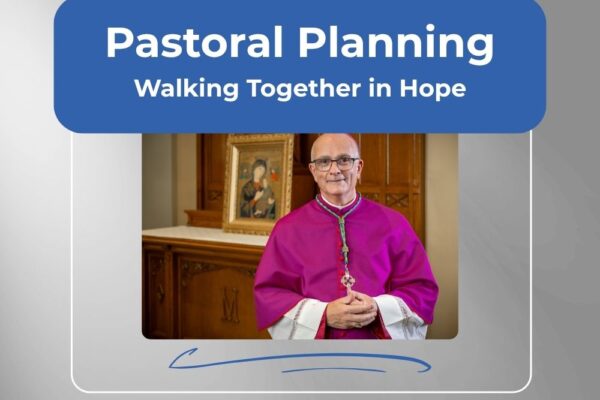
7. Opportunities and Pastoral Planning
Looking ahead, the diocese has opportunities to leverage its strengths—faithful clergy, devout laity, historical buildings—and invest in pastoral renewal. Evangelization, especially among families and young adults, emerges as a priority. Initiatives in catechetical programs, RCIA growth, and children’s liturgy offer adaptable models. Increased use of digital media for catechesis, livestreaming, and community outreach has already proven effective in pandemic-era ministry. As cultural secularization intensifies, the diocese must reaffirm its mission-centred identity, focusing on formation, service, and unity. Coordinated deanery plans and a transparent, consultative pastoral planning process will foster engagement and trust across the diocese. Collaboration with Catholic schools offers vital pathways for re-evangelization. Events like parish picnics, Lenten retreats, and RCIA open houses help bridge liturgical life and pastoral outreach. Investing in digital literacy for staff and clergy can enhance communication and catechesis, while parishioner-led initiatives—such as book clubs and prayer cenacles—offer adaptable ways to deepen discipleship.
8. Summary and Vision Forward
The Diocese of Pembroke stands at a threshold moment. Parishes rich in history, tradition, and faith face demographic decline, aging infrastructure, and evolving social landscapes. Yet the potential for renewal is evident in every deanery: vibrant liturgies, active councils, lay leadership, and strong pastoral care. The pastoral plan must address the realities—consolidation where necessary, investment where fruitful, formation everywhere. By grounding strategy in prayer, dialogue, and discernment, the diocese can journey together with hope and vision. The goal is not merely to survive—but to thrive as a Catholic witness in the Diocese of Pembroke and beyond. Given the significant challenges ahead—declining priest numbers, financial constraints, aging infrastructure, and demographic shifts—it is essential that the diocese elaborate a clear and realistic vision of how it can best serve the people of God with the resources available. This vision must be rooted in honest assessment, pastoral creativity, and collaborative discernment, prioritizing mission over maintenance and focusing energy where fruitfulness is greatest. Above all, the diocese is called to renew its mission: proclaiming the Gospel, forming disciples, and serving the vulnerable. A pastoral plan that builds on local successes, invites honest feedback, and transparently allocates resources will foster credibility and commitment. With unity, humility, and faith, the Catholic Church in Pembroke can continue its witness for generations to come.
